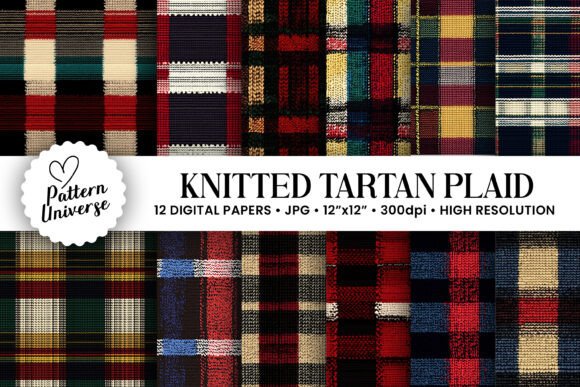
Knitted Tartan Plaid Digital Papers: Elevating Your Craft Projects with AI-Generated Texture
In the world of digital crafting, scrapbooking, and print-on-demand design, texture is everything. While flat colors and simple patterns have their place, nothing adds warmth, depth, and a sense of cozy authenticity quite like the look of knitted fabric. Specifically, knitted tartan plaid digital papers have become a staple for designers seeking to evoke feelings of comfort, heritage, and seasonal charm. With the advent of advanced artificial intelligence, creating high-quality, seamless textile patterns has never been more accessible or precise.
This article explores the value, application, and technical specifications of a curated collection of 12 knitted tartan plaid seamless patterns. Whether you are a hobbyist looking to create unique gift wraps or a professional designer preparing assets for sublimation printing, understanding how these digital assets work can significantly enhance your creative output.
The Appeal of Knitted Tartan in Modern Design
Tartan, often associated with traditional Scottish heritage, has transcended its cultural roots to become a universal symbol of style and structure. When rendered in a "knitted" aesthetic, the pattern moves beyond rigid geometric lines into something organic and tactile. This visual shift triggers an emotional response in viewers—a sensation known as "visual haptics," where the eye perceives softness and warmth even on a screen.
For crafters and designers, this means that knitted tartan patterns are versatile across seasons. They are not limited to winter holidays; they work beautifully for autumn festivals, rustic weddings, academic themes, and casual everyday designs. The interplay of thick yarn-like textures with classic plaid grids creates a rich visual hierarchy that stands out against simpler backgrounds.
Why Choose Digital Over Physical?
One might wonder why one would choose a digital paper over buying physical scrapbook pages or fabric. The answer lies in versatility and precision. Physical materials are bound by inventory costs, shipping times, and the limitations of what is currently in stock. Digital papers, however, offer infinite scalability and instant access. Furthermore, when generated using AI, these patterns can be tailored to specific color palettes that match brand guidelines or personal preferences perfectly, something difficult to achieve with mass-produced physical goods.
Understanding the Technical Specifications
To fully appreciate the utility of these digital assets, it is crucial to understand the technical details provided in the product description. A standard set of these digital papers includes specific attributes that ensure professional-grade results.
Resolution and Print Quality
The most critical factor in digital printing is resolution. These files are provided in High-Resolution 300dpi (dots per inch). In the printing industry, 300dpi is the gold standard for sharp, clear images. If you were to print a lower-resolution image (such as 72dpi, common for web use) at a large size, the result would be pixelated and blurry. By ensuring a 300dpi resolution, these digital papers guarantee that every stitch of the "knitted" texture remains crisp and distinct, whether printed on a small greeting card or a large poster.
Dimensions and Aspect Ratio
Each file measures 3600 x 3600 pixels, which translates exactly to 12″ x 12″ at 300dpi. This dimension is significant because 12x12 inches is the international standard size for scrapbooking paper. This means:
- Direct Compatibility: You can drop these files directly into software like Cricut Design Space, Silhouette Studio, Adobe Photoshop, or Canva without needing to resize or crop them.
- Seamless Tiling: As "seamless patterns," these images are designed to repeat infinitely without visible borders. This allows you to extend the background to any size needed for wall murals, website headers, or large-scale fabric prints.
Practical Applications for Creatives
The versatility of these 12 digital papers extends far beyond simple digital decoration. Here is how different types of creators can utilize this zip file containing 12 unique designs.
1. Gift Wrapping and Packaging
In an era where sustainability and aesthetics are paramount, custom gift wrapping is a growing trend. Using these digital papers, you can design bespoke wrapping paper that matches the recipient’s favorite colors or the theme of the event. Because the files are seamless, you can print them on rolls of plain white paper using a home inkjet printer, cutting down on waste and cost while providing a luxurious, personalized touch.
2. Greeting Cards and Invitations
For stationery designers, texture is key to perceived value. A greeting card featuring a subtle knitted tartan background feels more premium than one with a flat color. These patterns serve as perfect backdrops for text overlays. Imagine a holiday invitation with elegant gold foil text overlaid on a deep green knitted plaid—it creates immediate visual interest and sets a festive tone.
3. Sublimation and Tumbler Wraps
This is perhaps one of the most lucrative applications for these digital assets. The rise of personalized drinkware has created a massive market for sublimation printers. However, sublimation requires seamless patterns to avoid awkward seams around the curved surface of a tumbler.
Because these files are 12x12 inches and seamless, they can be tiled in design software to cover the entire circumference of a 20oz or 30oz tumbler. The high resolution ensures that the "yarn" texture does not break up or blur when stretched over the curved surface, resulting in a professional-looking finished product.
4. Scrapbooking and Digital Journaling
Digital scrapbookers rely heavily on high-quality digital papers to create layouts without ever touching physical glue or scissors. These knitted tartan papers add a layer of complexity to digital layouts, allowing users to mix and match textures. Pair a rough, chunky knit plaid with a smooth silk ribbon digital element to create contrast and depth in your compositions.
5. Backgrounds for Social Media and Web Design
Content creators constantly need fresh backgrounds for Instagram stories, Pinterest pins, and blog posts. A knitted tartan background provides a cozy, inviting frame for content. It is particularly effective for lifestyle bloggers, fashion influencers showcasing autumn/winter collections, or educators creating classroom decorations.
How AI Enhances Pattern Creation
You may notice these patterns are described as "Ai Generated." Some traditionalists might question the validity of AI-generated art, but from a practical standpoint, AI offers distinct advantages for pattern design.
Traditional pattern making requires complex knowledge of vector editing and tile logic. AI tools can generate intricate, realistic textures that mimic the irregularities of real-world knitting—such as slight variations in yarn thickness or minor imperfections in the weave—that are difficult to replicate manually. This realism adds character to the digital asset, preventing it from looking too sterile or computer-generated.
Moreover, AI allows for rapid iteration. Instead of spending days drafting a single plaid variation, designers can generate dozens of variations based on specific prompts (e.g., "chunky wool," "fine cotton blend," "pastel tones") and select the best ones for inclusion in a pack. This efficiency benefits the consumer by providing a diverse range of styles in a single download.
Maximizing Value from Your Purchase
When you receive the zip file containing these 12 digital papers, consider the following tips to get the most out of them:
- Organize Your Workflow: Extract the files immediately and organize them into folders by color family (e.g., Reds, Blues, Neutrals). This saves time when searching for the right backdrop later.
- Test Print First: Before committing to a large batch of prints, always do a test print on the actual material you plan to use. Paper weight, finish (matte vs. glossy), and printer calibration can affect how the "knitted" texture appears.
- Layering Techniques: Don’t just use the paper as a flat background. Experiment with blending modes in Photoshop or similar software. Overlaying a solid color shape with a "Multiply" or "Overlay" blending mode on top of the tartan can create stunning shadow effects and depth.
- Commercial Use Check: Always review the license agreement included with the digital papers. While many allow for commercial use in end products (like selling printed tumblers), some restrict resale of the digital files themselves. Understanding these terms protects your business legally.
Conclusion
The integration of high-quality, AI-generated knitted tartan plaid digital papers represents a convergence of technology and tradition. By providing 12 unique, high-resolution, seamless patterns, this resource empowers creators to bring a sense of warmth and professionalism to their projects. Whether you are wrapping a gift for a loved one, designing a scalable brand identity, or producing custom merchandise for sale, these digital assets offer the flexibility and quality needed to succeed.
In a digital landscape saturated with generic templates, adding authentic, textured elements like knitted tartan sets your work apart. It invites the viewer to engage with your design on a sensory level, bridging the gap between the virtual and the physical. Thanks for stopping by, and we hope these digital papers inspire your next creative masterpiece.