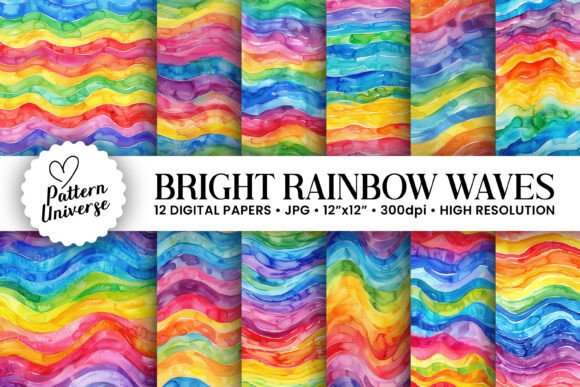
Watercolor Rainbow Waves Digital Papers
In an era where visual communication is the primary language of digital and physical marketing, the demand for authentic, hand-crafted aesthetics has never been higher. Consumers are increasingly drawn to designs that feel personal, organic, and warm, moving away from the stark, sterile look of early digital graphics. This shift creates a unique opportunity for creators, entrepreneurs, and hobbyists who can blend traditional artistic sensibilities with modern convenience. Enter Watercolor Rainbow Waves Digital Papers, a collection designed to bridge the gap between artisanal charm and professional efficiency. These assets are not merely decorative backgrounds; they are foundational elements that can elevate gift wrapping, greeting cards, invitations, tumbler wraps, and scrapbook layouts.
The appeal of watercolor textures lies in their unpredictability. Unlike vector shapes that are rigid and precise, watercolor washes bleed, blend, and vary in intensity, mimicking the subtle imperfections of human creation. When combined with the vibrant, optimistic spectrum of rainbow waves, these digital papers offer a sense of joy and fluidity that resonates across various demographics. Whether you are a small business owner launching a new product line or a parent preparing for a child’s birthday party, having access to high-quality, seamless patterns allows you to produce polished results without needing advanced graphic design skills.
The Evolution of Digital Craft Assets
Historically, obtaining high-quality textured backgrounds required either significant artistic training or expensive licensing fees for stock photography. The rise of AI-generated art and improved digital asset marketplaces has democratized this resource. Today, creators can access complex, layered textures instantly. However, not all digital papers are created equal. Many low-resolution files pixelate when printed, ruining the illusion of a hand-painted surface. This is where technical specifications become critical. The inclusion of 12 distinct digital papers within a single zip file provides variety, but it is the resolution and dimensions that determine usability.
Modern workflows demand versatility. A designer might need a background for a social media post one day and a printable invitation the next. To accommodate this, the files provided are sized at 3600 x 3600 pixels, which translates to 12″ x 12″ at 300dpi. This standard size is crucial for several reasons. First, 300dpi (dots per inch) is the industry standard for high-quality printing. It ensures that when you print your designs on cardstock, wrapping paper, or vinyl for tumbler wraps, the image remains crisp and clear. Second, the 12×12 inch dimension is the universal standard for digital scrapbooking and many craft cutting machines, such as Cricut and Silhouette. This compatibility means you do not need to constantly resize or distort your images, preserving the integrity of the watercolor texture.
Practical Applications Across Creative Industries
The utility of Watercolor Rainbow Waves Seamless Patterns extends far beyond simple decoration. Let us explore how these specific assets can be integrated into practical projects for different user groups.
Gift Wrapping and Packaging Design
For small businesses and artisans, packaging is often the first physical touchpoint a customer has with a brand. Custom wrapping paper adds a layer of perceived value that generic store-bought options cannot match. By using these seamless patterns, you can create custom-printed wrapping paper that features soft, flowing rainbow waves. The seamless nature of the pattern is particularly important here; it ensures that when the paper is rolled or folded, the design continues uninterrupted, maintaining a professional appearance. The watercolor effect softens the colors, making them suitable for a wide range of occasions, from baby showers to corporate gifts.
Greeting Cards and Invitations
The stationery market is highly competitive, standing out requires a balance of elegance and approachability. Watercolor textures provide that warmth. For wedding invitations, graduation announcements, or holiday cards, these digital papers serve as excellent backdrops. The "rainbow" aspect does not necessarily mean a literal spectrum of bright stripes; rather, it suggests a harmonious blend of multiple hues that evoke celebration and positivity. When used as a background, text overlays in elegant serif or handwritten fonts pop beautifully against the muted yet colorful washes. Because the files are high-resolution, you can zoom in to check details like ink splatters or pigment granulation, ensuring every element of your design is intentional.
Tumbler Wraps and Vinyl Crafts
The sublimation and vinyl crafting markets have seen explosive growth, driven by the desire for personalized merchandise. Tumbler wraps require precise, repeatable patterns to avoid awkward seams when wrapped around cylindrical surfaces. The "seamless" quality of these AI-generated patterns is key. AI generation allows for complex algorithmic blending that creates smooth transitions between colors, reducing the visible "tiles" often found in older digital patterns. When applied to stainless steel tumblers, the vibrant yet soft tones of the watercolor waves create a sophisticated look that appeals to both teenagers and adults. This versatility makes the asset pack valuable for Etsy sellers and craft fair vendors alike.
Digital Scrapbooking and Blogging
For educators, bloggers, and digital planners, visual engagement is paramount. Static white pages can feel dry and uninviting. Incorporating Watercolor Rainbow Waves Digital Papers as page backgrounds or header images adds depth and personality to digital products. Since the files are 300dpi, they maintain quality even when scaled down for web use, though they are primarily optimized for print. Educators can use these patterns to create visually appealing worksheets or classroom decorations, while bloggers can use them to break up text-heavy posts with aesthetically pleasing dividers or featured images.
Why AI-Generated Art Fits Modern Workflows
There is often a misconception that AI-generated art lacks soul. However, in the context of digital paper design, AI offers a distinct advantage: consistency and complexity. Traditional digital painting can be time-consuming, and achieving perfect seamless repeats manually is difficult. AI algorithms can generate intricate, noise-free textures that mimic the random distribution of watercolor pigments more efficiently than manual brushwork. For the end-user, this means getting a product that looks hand-crafted but behaves predictably in software. The patterns are clean, the edges align perfectly, and the color palettes are curated to ensure harmony. This reduces the friction in the creative process, allowing users to focus on layout and messaging rather than troubleshooting broken patterns or muddy colors.
Furthermore, the forward-looking nature of this technology suggests that digital assets will continue to evolve toward greater realism and adaptability. By starting with high-fidelity, AI-enhanced textures like these, creators are positioning themselves to leverage future tools that may allow for even more dynamic customization, such as changing color schemes or adjusting opacity levels with a single click. Investing in high-quality base assets now prepares your workflow for these advancements.
Maximizing Value from Your Digital Purchase
To get the most out of this collection, consider the following practical tips:
- Layering Techniques: Do not use the patterns flatly. Overlay them with semi-transparent shapes, textures, or typography to create depth. The watercolor effect works best when it interacts with other elements.
- Color Matching: While the rainbow waves are vibrant, they are likely balanced with neutral undertones. Use a color picker tool in your design software to sample the lighter areas of the wave for text colors, ensuring readability without harsh contrast.
- Seamless Tiling: When designing for large formats like wall murals or continuous wrapping paper rolls, use your design software’s "pattern fill" or "tile" function. Verify that the edges match perfectly before committing to a full print run.
- File Management: Keep the original 3600x3600px files in a dedicated folder. If you need smaller versions for web use, export copies rather than resizing the originals repeatedly, which can degrade quality over time.
The combination of aesthetic appeal and technical precision makes Watercolor Rainbow Waves Digital Papers a versatile tool for any creative project. Whether you are enhancing a physical product like a tumbler or a digital asset like a blog header, these 12 high-resolution, seamless patterns provide the foundation for professional-grade design. They reflect a broader trend in creativity: the desire for authenticity supported by technological ease. By integrating these assets into your workflow, you acknowledge that great design is not just about what you see, but how it feels—soft, inviting, and beautifully imperfect.
As you explore the possibilities within this zip file, remember that the best designs come from experimentation. Try combining the rainbow waves with minimalist icons, bold typography, or natural elements like dried flowers. The flexibility of digital paper allows you to iterate quickly, testing different moods and styles until you find the perfect fit for your audience. Thanks for stopping by, and we hope these resources inspire your next creative endeavor.